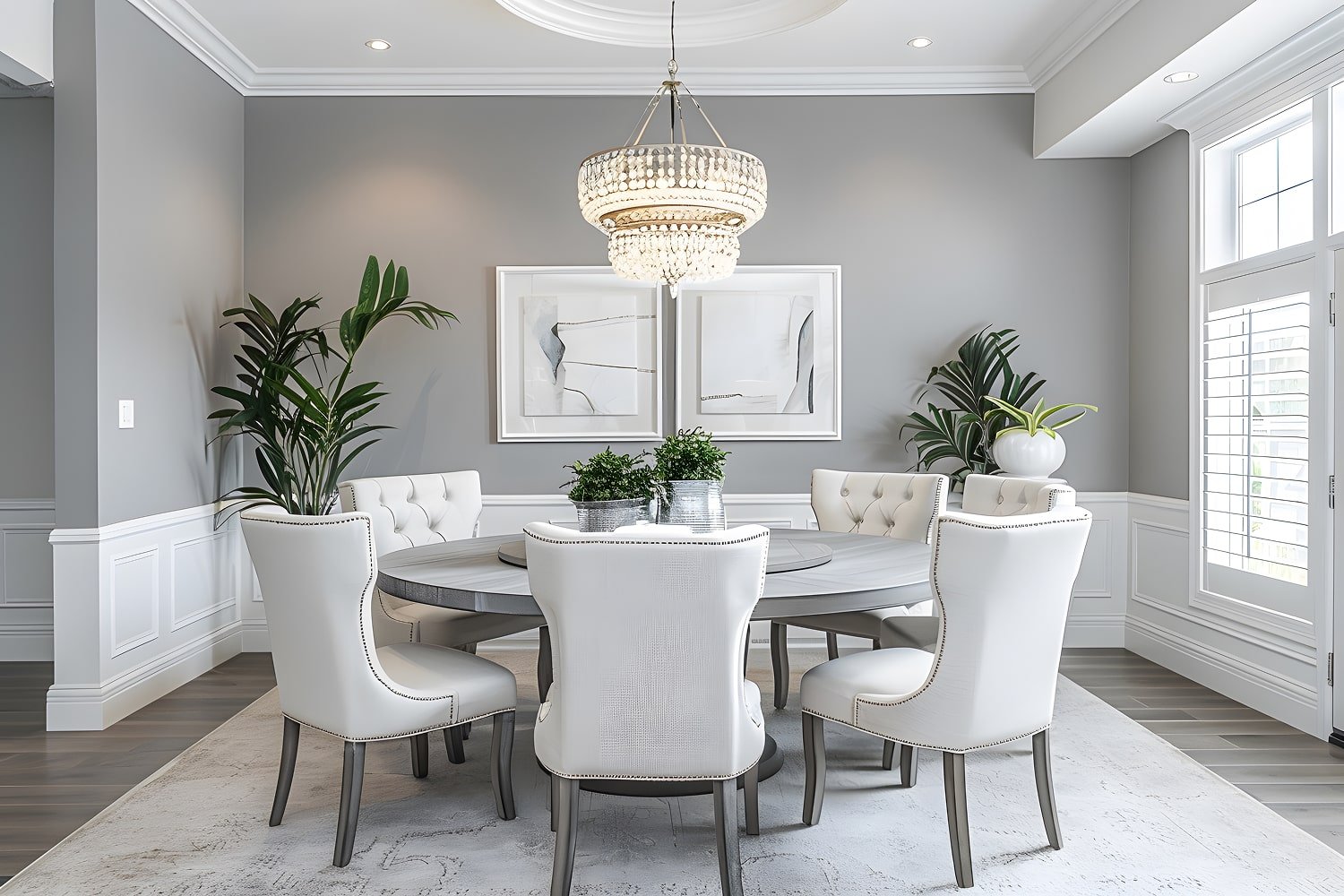
Kitchen Cabinetry / Materials Guide
Two kitchens can look almost identical from the outside, yet their cabinets may be built from very different materials. What is behind the doors matters just as much as the finish you see.
Plywood, MDF, and particleboard are all used in kitchen cabinetry. Each has strengths, limitations, and applications where it may make sense. The challenge is knowing which material belongs in which part of the cabinet.
Plywood is often selected for structural cabinet-box components, MDF is widely used for smooth painted doors, and properly specified particleboard can work in modular cabinet systems. None is automatically waterproof, and no material name guarantees manufacturing quality.
This guide explains how the three materials differ, where cabinet construction matters most, and what homeowners, designers, and project buyers should verify before ordering custom kitchen cabinets.
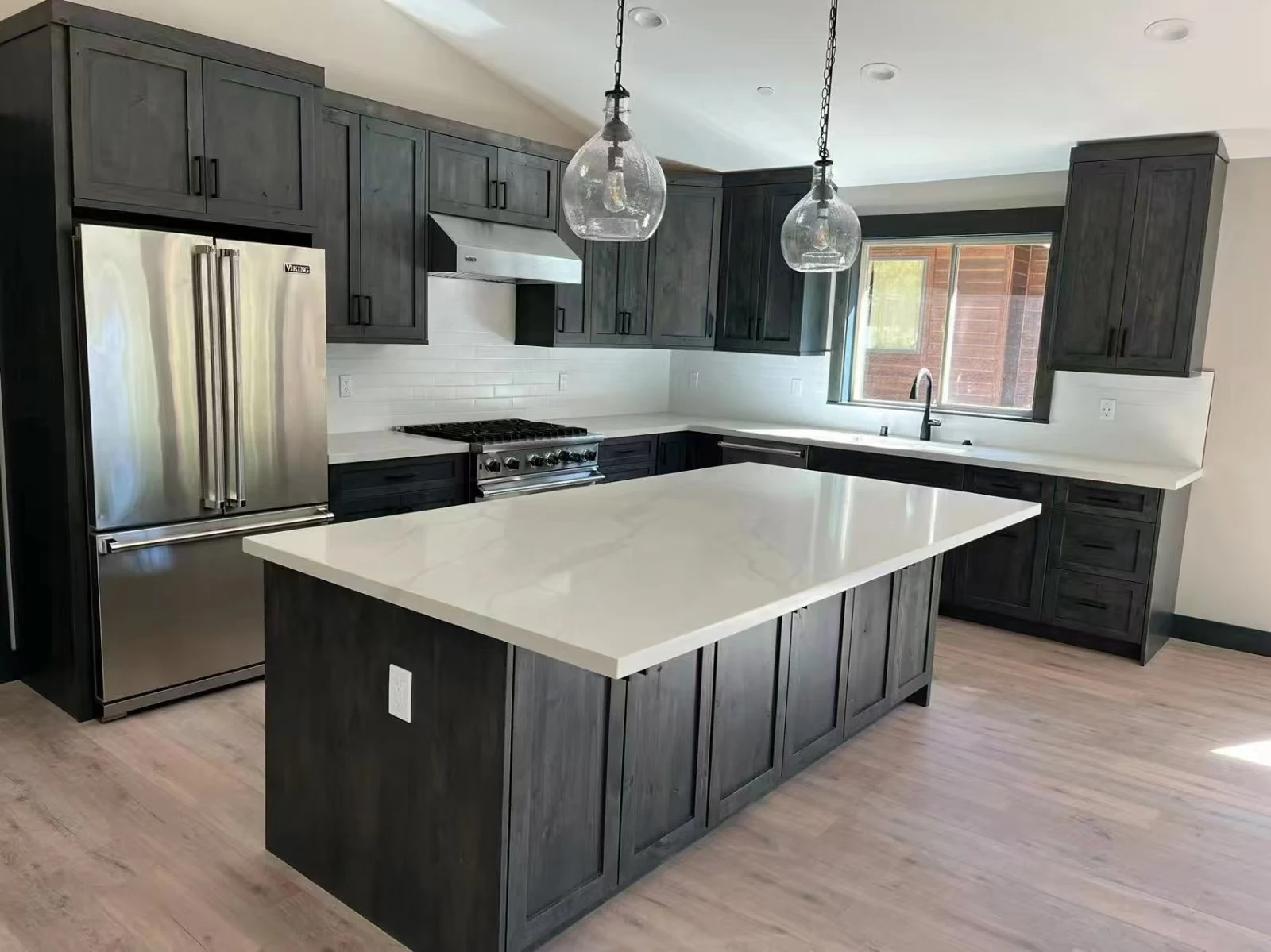
What Are Plywood Kitchen Cabinets?
Plywood is an engineered wood panel formed by bonding thin wood veneers into layers. In conventional veneer-core plywood, adjoining layers are generally oriented with their grain in different directions. The layered construction can provide useful stiffness, strength, and dimensional stability.
When a kitchen is advertised as having plywood cabinets, that description usually refers to the cabinet boxes, rather than every visible component. Side panels, shelves, cabinet bottoms, back panels, drawer parts, and doors may use different materials.
For example, a kitchen might combine plywood box panels with MDF painted doors, metal hinges, engineered drawer boxes, and a separate countertop material. That combination is not necessarily a compromise. Each component can be specified according to its function and intended finish.
The more useful question to ask a cabinet supplier is: Which parts are plywood, what grade and thickness will be supplied, and how will the cabinets be assembled and finished?
Plywood vs. MDF vs. Particleboard: What’s the Difference?
These three materials are frequently grouped together as engineered wood, but their core structures are different. Knowing the difference helps you understand how panels are cut, joined, finished, and used in a kitchen.
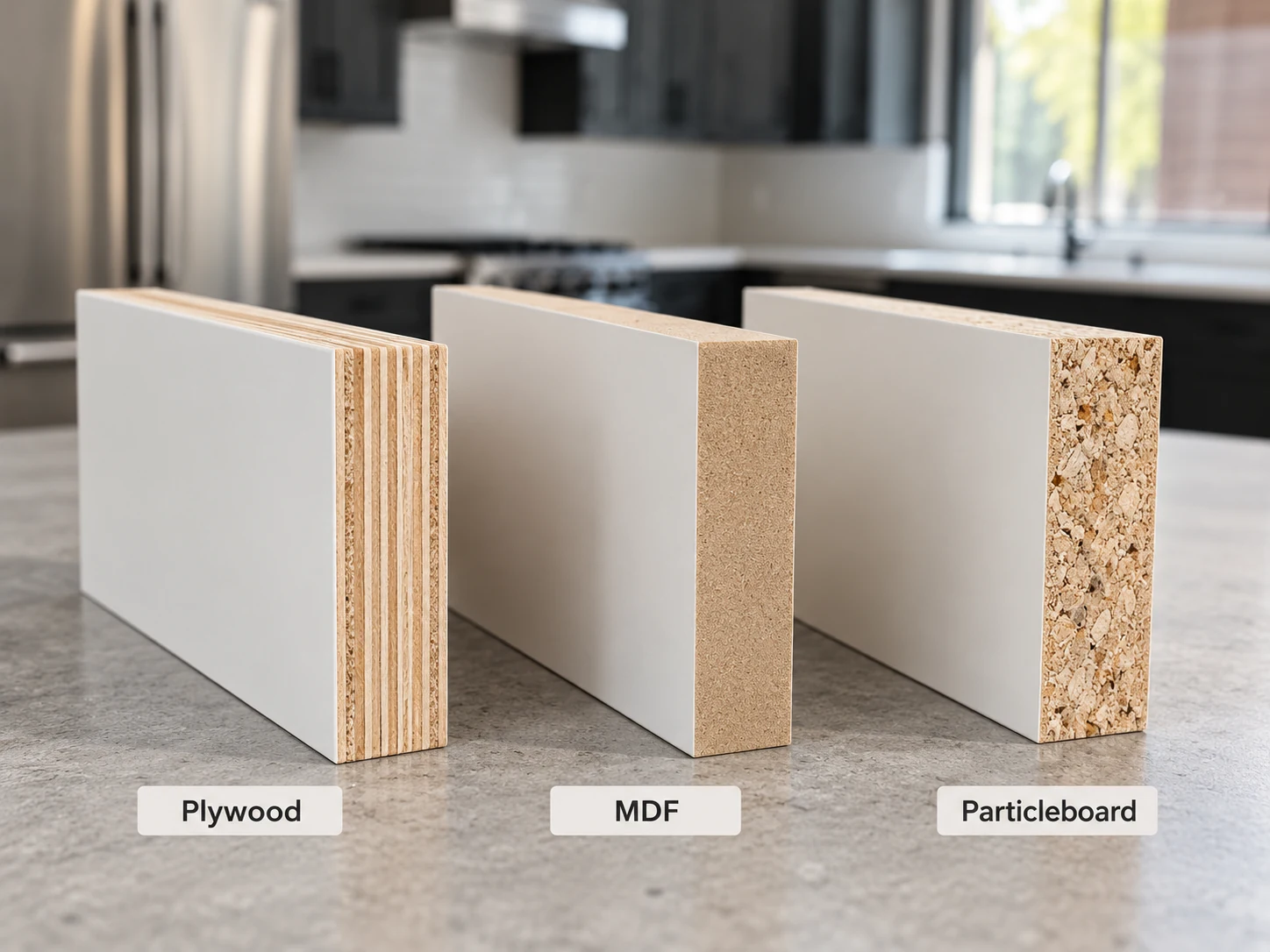
Plywood: Layered Wood Veneers
Plywood is recognizable by its laminated layers. Suitable grades can provide good structural performance and screw-holding characteristics, making it a common choice for cabinet boxes and some shelving. Performance still depends on the species, core construction, bonding quality, panel thickness, and manufacturing consistency.
MDF: A Smooth, Uniform Fiber Core
Medium-density fiberboard (MDF) is made from refined wood fibers bonded under heat and pressure. Its uniform surface is useful for painted doors and routed decorative profiles.
Standard MDF can swell when exposed to excessive moisture, especially where edges are unprotected. Moisture-resistant grades exist, but the specific grade must be confirmed.
Particleboard: Wood Particles Bonded Into Panels
Particleboard is manufactured from wood particles and binders. It is widely used in melamine-faced modular cabinets.
Suitable particleboard grades can meet everyday indoor cabinet requirements, but fastener selection, panel grade, edge treatment, and exposure conditions must be considered.
| Feature | Plywood | MDF | Particleboard |
|---|---|---|---|
| Core structure | Bonded veneer layers | Fine wood fibers | Bonded wood particles |
| Typical cabinet uses | Cabinet boxes, sides, shelves | Painted doors, decorative panels | Melamine-faced boxes and shelves |
| Surface characteristics | Depend on face veneer and applied finish | Uniform surface for paint and profiles | Typically covered by a decorative surface |
| Fastener considerations | Often good with suitable grade and fixings | Use hardware appropriate for fiberboard | Use hardware appropriate for particleboard |
| Moisture considerations | Grade and edge protection are important | Standard grades can swell | Standard grades can swell |
| What to verify | Core, bonding, thickness, grade | Grade, thickness, sealing, finish | Grade, density, fasteners, sealing |
There is no universally best board for every cabinet part. The choice should depend on the component’s job, the intended surface finish, expected loading, and environmental conditions.
Advantages and Limitations of Plywood Kitchen Cabinets
Plywood is popular for cabinet-box construction for practical reasons, not simply because it is described as a premium material.
Where Plywood Can Offer Advantages
- Structural performance: Suitable panel grades can offer stiffness and strength for sides, bottoms, and shelves.
- Fastening performance: Properly specified plywood can hold mechanical fixings effectively in cabinet assemblies.
- Dimensional stability: Cross-oriented veneer layers help control certain types of wood movement.
- Material flexibility: Plywood can be supplied with different veneer faces and decorative finishes.
Where Plywood Still Has Limitations
Not all plywood is manufactured to the same standard. Some panels can contain internal voids or inconsistent core layers. Unprotected edges can absorb water; unsuitable adhesives, weak joints, and poor installation can undermine the finished cabinet.
In addition, plywood is not the automatic best choice for a smooth painted door. A suitable MDF door may provide a more uniform painted surface. Compare the entire construction, not just a supplier’s material label.
Which Material Is Best for Different Cabinet Parts?
A kitchen is made of several kinds of cabinet components. A box panel, door front, adjustable shelf, drawer, and back panel do not all have the same performance requirements.
Cabinet Boxes, Side Panels, and Shelves
The cabinet box holds the doors, drawers, internal fittings, and stored items. Side panels and shelves need appropriate stiffness, reliable joints, and correct hardware attachment.
Plywood is one option, while engineered MDF or particleboard systems can also be suitable when designed and specified correctly.
Pay attention to the shelf span and expected load. A thick-looking shelf is not necessarily strong enough without the right material grade and supports.
Cabinet Doors and Drawer Fronts
The exterior finish often drives the material decision. MDF is frequently chosen for painted cabinet doors, while wood veneer, solid wood components, or other panels can suit different designs.
Door weight, hinge count, edge finish, and the size of each panel need to be considered together.
Back Panels and Internal Shelving
Back-panel thickness, fastening method, and any cutouts should be stated in the specification. Internal shelves should allow for expected loads and, where adjustable, appropriate support fittings.
Cabinet Construction: Hinges, Joinery, and Edge Finishing
Two cabinet sets using similarly named boards may perform very differently. Manufacturing quality also depends on cutting accuracy, panel connections, hinge locations, drawer hardware, and surface protection.
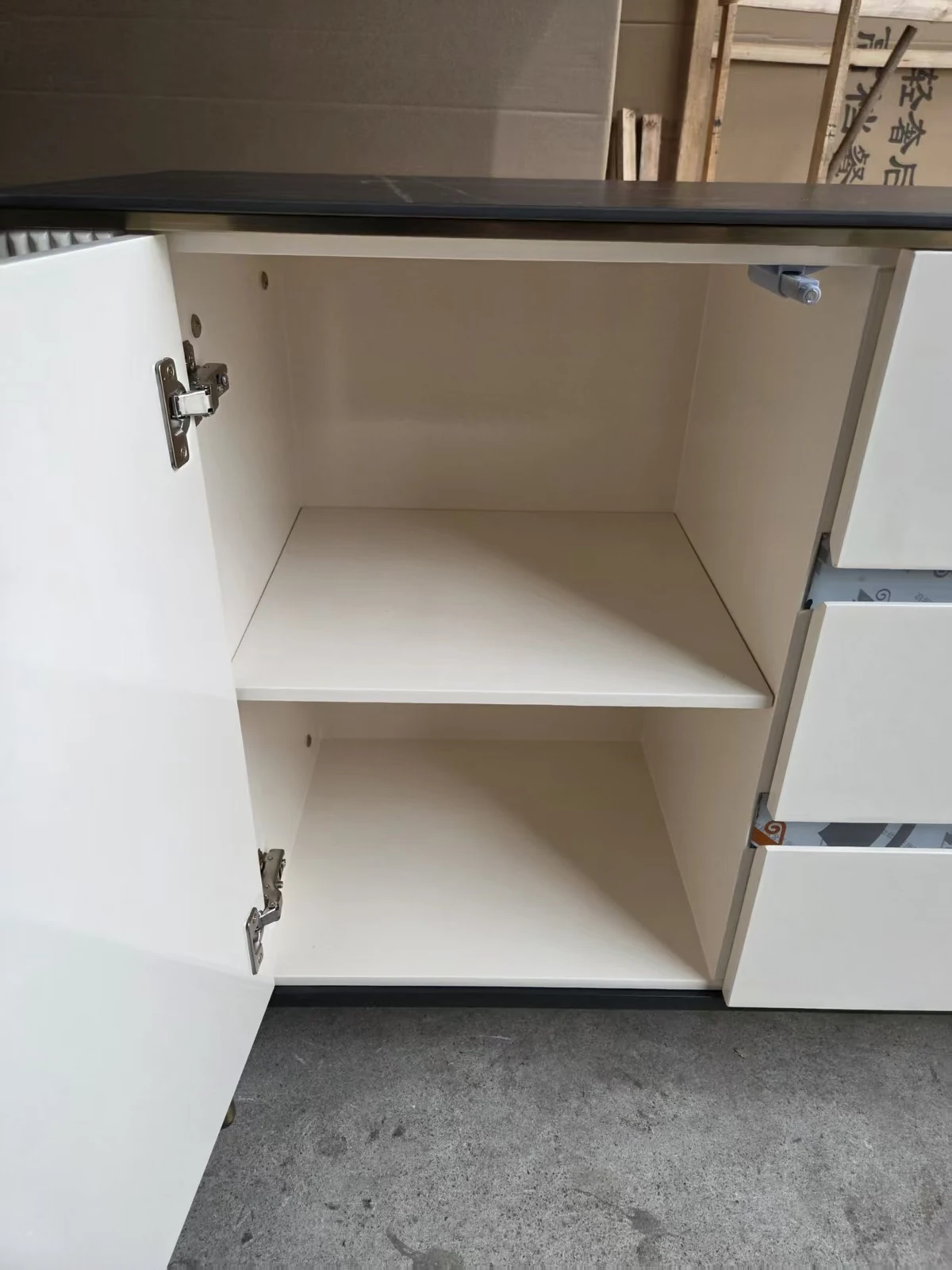
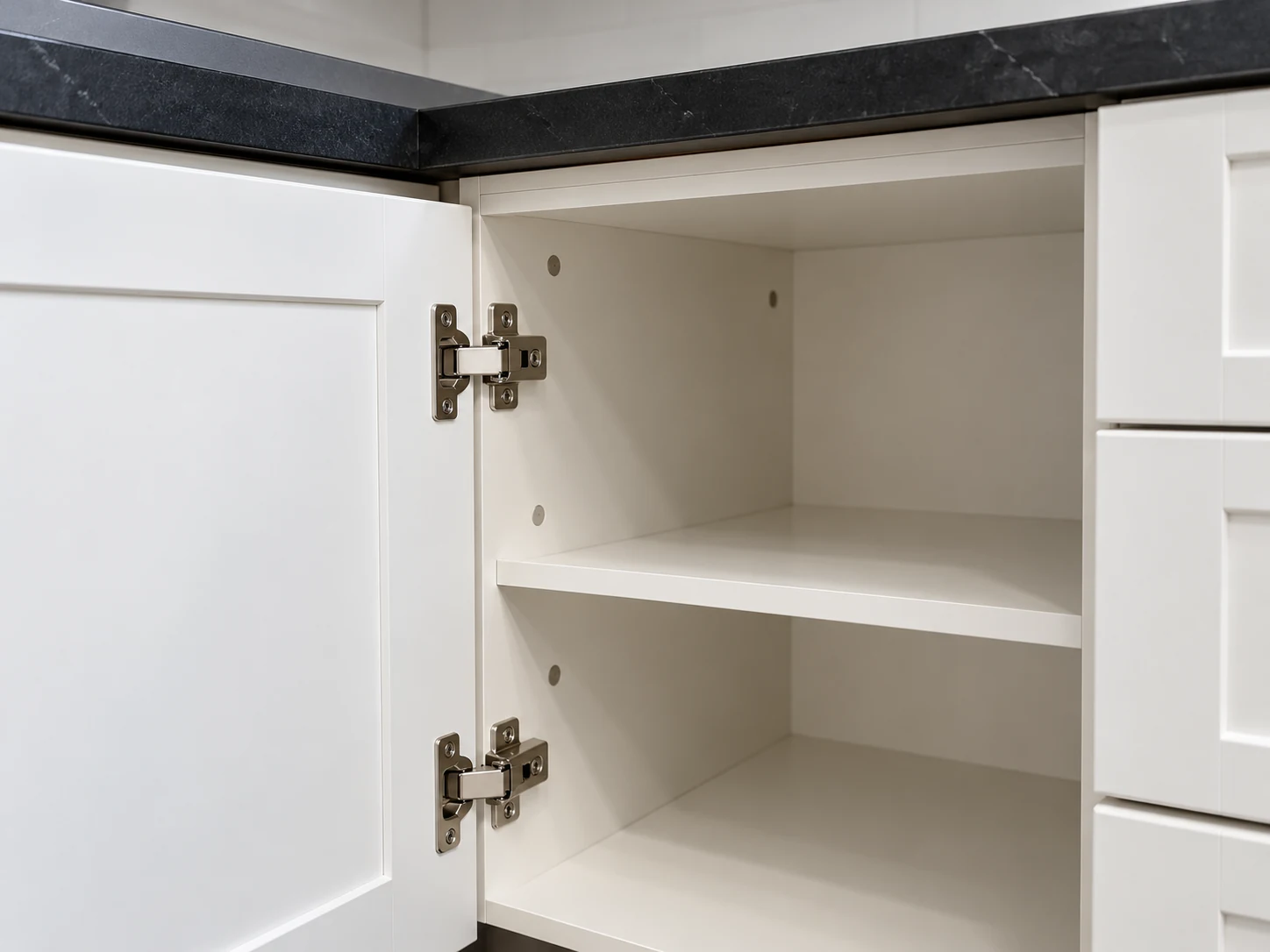
Panel Thickness and Joinery
Specifications should identify the material and thickness of each important component: sides, bottoms, shelves, and backs.
Connection methods may include screws, dowels, grooves, or cam fittings; their suitability depends on panel type, dimensions, and loading.
Hinge and Drawer Hardware
Hinges and runners should be matched to door dimensions, weight, opening angle, and the expected frequency of use.
The type and location of fixings are also important because different engineered wood panels require suitable mounting methods.
Edge Banding and Surface Protection
Panel edges are easy to overlook when reviewing an attractive finished kitchen. Ask whether exposed edges, service cutouts, sink-area openings, and concealed panel edges receive the specified protection.
Check for gaps, loose banding, and uneven trimming against approved samples.
Quality-check reminder: A good cabinet is a system. Panel grade, accurate machining, joints, hardware, finish quality, and installation all contribute to the result.
Are Plywood Kitchen Cabinets Waterproof?
No. Plywood should not be described as automatically waterproof. Different plywood grades and bonding systems can have different moisture performance, but prolonged wetting can damage wood-based cabinets.
Surface coatings, exposed edges, joints, and the time water remains in contact with the panel all matter.
Why Sink Cabinets Need More Attention
Under-sink cabinets contain drain and water-supply connections and can be exposed to drips, splashes, condensation, or leaks.
The base panel, plumbing cutouts, back panel, and panel edges are important details to specify and inspect.
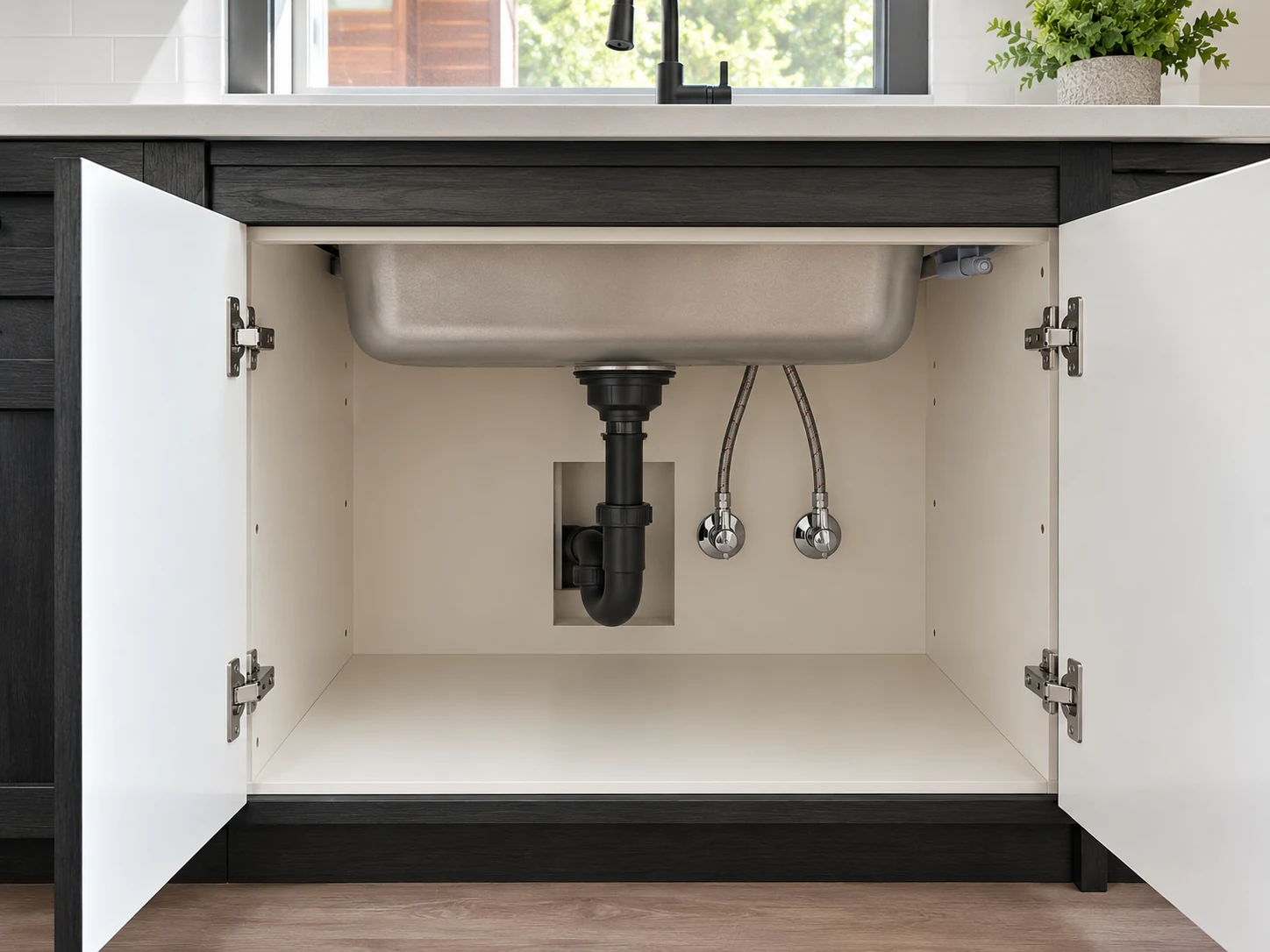
Request the exact panel specification, not just a broad term such as “moisture-proof board.”
Moisture-resistant grades can be useful, but they are not substitutes for sealed edges, suitable installation, and prompt repair of plumbing leaks.
Cabinet design should allow leaks to be identified and repaired. No plywood, MDF, or particleboard cabinet should be expected to withstand standing water indefinitely.
What to Check Before Ordering Plywood Kitchen Cabinets
When ordering custom cabinetry, especially for an international project, the material specification should be clear enough that the designer, manufacturer, and installation team are reviewing the same product.
- Material schedule: List plywood, MDF, particleboard, or other materials separately for boxes, shelves, fronts, and backs.
- Panel grades and thicknesses: Identify requirements by component instead of assuming one thickness throughout the kitchen.
- Edge treatment: Specify edge banding or sealing, including hidden wet-area cutouts.
- Hardware: Confirm hinge and runner models, load ratings, and fixing arrangements.
- Drawings and samples: Review layouts, elevations, cabinet dimensions, finishes, and approved material samples.
- Site conditions: Verify measurements, appliance clearance, plumbing connections, and installation requirements.
- Destination-market requirements: Request applicable product and compliance documentation, including relevant U.S. composite-wood requirements where applicable.
Formaldehyde Standards for U.S. Projects
For the U.S. market, the EPA’s TSCA Title VI rules address formaldehyde emissions from regulated hardwood plywood, MDF, and particleboard, as well as certain finished products containing those materials.
Buyers should verify whether the supplied materials and products fall within the rules and obtain the appropriate documentation rather than relying on vague claims such as “eco-friendly.”
See the official EPA guidance on formaldehyde emission standards for composite wood products.
Check Installation Readiness
Even correctly manufactured cabinets can develop problems if wall and floor conditions, appliance openings, countertop support, or plumbing locations are not checked.
Confirm site measurements and installation responsibilities before production and shipment.
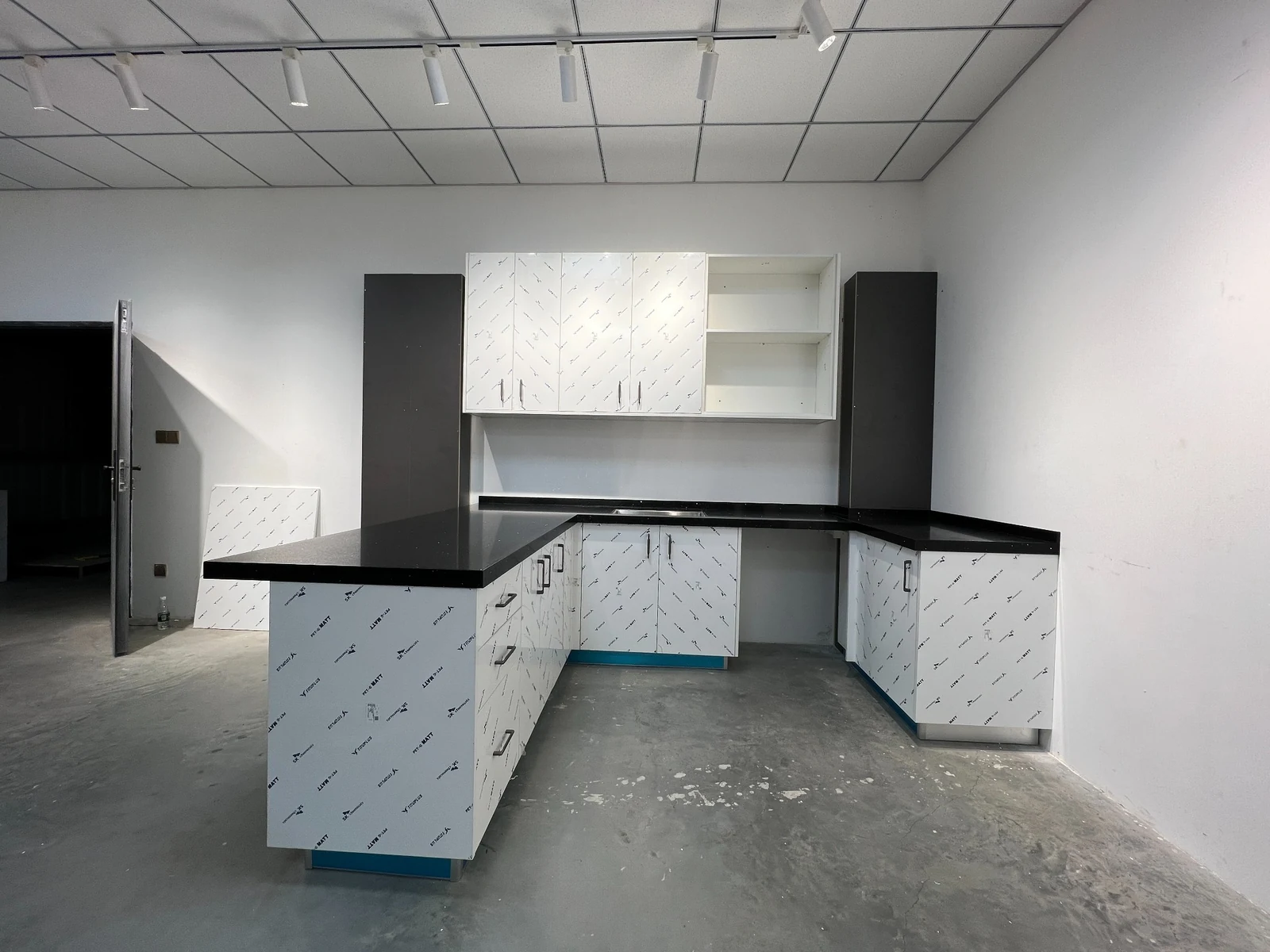
Choosing Custom Kitchen Cabinets for Residential and Commercial Projects
A private home, apartment development, hotel, and commercial interior may need very different cabinet systems.
A homeowner might prioritize personalized storage, while a project buyer may require repeatable dimensions, approved finishes, and consistent hardware across many rooms.
For an international sourcing enquiry, prepare room measurements, cabinet schedules, drawings, preferred finishes, the destination market, and any product standards required for the project.
Clear information makes it easier to discuss available manufacturing and sourcing options.
George Group works with residential and commercial clients on furniture, cabinetry, and building-material sourcing from China. For custom kitchen cabinets, the team can discuss design requirements, material options, finishes, and project coordination based on the information supplied.
If you are also deciding on the degree of customization or cabinet-box construction, explore our guides to semi-custom vs. custom kitchen cabinets and frameless vs. framed kitchen cabinets.
Frequently Asked Questions
Are plywood kitchen cabinets better than MDF cabinets?
For some cabinet-box applications, plywood may offer useful stiffness and fastening characteristics. MDF can be well suited to smooth painted doors and decorative profiles. The better choice depends on the component, board grade, finishing, and construction.
Are plywood cabinets more durable than particleboard cabinets?
Plywood may have advantages in some structural or fastening applications, but durability also depends on product grade, moisture exposure, hardware, workmanship, maintenance, and installation. Material name alone cannot predict service life.
Are plywood kitchen cabinets waterproof?
No. Some plywood products are designed for better moisture resistance, but wood-based cabinet components can still be damaged by prolonged wetting. Edges and joints need appropriate protection.
Can MDF be used for kitchen cabinet doors?
Yes. Suitable MDF products are commonly used for painted door panels because of their smooth surface. The choice of grade, edge treatment, finish, hinges, and environmental conditions remains important.
Can plywood and MDF be used together in one kitchen?
Yes. A kitchen can use plywood for selected box components and MDF for specified door panels or other parts. Combining materials can be appropriate when each is selected for its intended function.
What should I request before ordering custom cabinets?
Ask for material and thickness schedules, construction drawings, approved samples, hardware specifications, edge-finishing requirements, and relevant destination-market compliance information. Also confirm site measurements and installation responsibilities.