
Kitchen Cabinetry / International Sourcing Guide
Buying custom kitchen cabinets from China can give homeowners, designers, and project buyers access to a wide range of designs, materials, and manufacturing options. But the success of an international cabinet order depends on much more than choosing a style from a catalog.
Cabinet dimensions must match the installation site. Materials and finishes need to be clearly specified. Shop drawings should be reviewed before production, and completed cabinets must be checked and packed for international transportation.
The most important part of sourcing custom kitchen cabinets from China is turning a design concept into a clear manufacturing specification that can be checked before the order leaves the factory.
This guide walks through the practical process, from finding a suitable supplier and preparing drawings to material selection, quality inspection, export packaging, shipping, and installation planning.
Why Source Custom Kitchen Cabinets from China?
China has an extensive furniture and building-material manufacturing network, including companies specializing in kitchen cabinets, wardrobes, vanities, and other fitted furniture. For international buyers, this creates opportunities to source different cabinet styles and coordinate multiple product categories through one supply network.
Custom kitchen cabinets can be manufactured for residential kitchens, apartments, villas, hospitality projects, and other spaces where standard cabinet dimensions or finishes may not meet the design requirements.
Depending on the supplier and manufacturing method, available options can include cabinet dimensions, door finishes, internal storage, hardware, countertops, and specialized cabinet layouts.
Customization Beyond Standard Cabinet Sizes
Unlike a standard catalog cabinet order, a custom project may require non-standard cabinet widths, full-height storage, built-in appliance openings, irregular wall conditions, or specialized island configurations.
These details need to be resolved before manufacturing. A supplier should not simply reproduce a kitchen photograph without reviewing dimensions, materials, construction, and site requirements.
Coordinating Cabinets with Other Materials
A kitchen project often involves more than cabinetry. Buyers may also need countertops, sinks, faucets, lighting, hardware, doors, and other interior products.
Working with a project sourcing partner can simplify communication between different product categories. However, buyers should still confirm which items are included in the supplier’s quotation and which require separate installation or local procurement.
What Should You Prepare Before Ordering Custom Kitchen Cabinets?
Before requesting a quotation from a kitchen cabinet supplier in China, prepare as much project information as possible. The better the documentation, the easier it is to discuss a feasible design and identify missing information.
Floor Plans and Site Measurements
Start with the kitchen floor plan and basic room measurements. Important dimensions include wall lengths, ceiling height, door and window positions, and the location of plumbing, electrical connections, and ventilation.
For an existing building, measurements should be verified on site. Walls may not be perfectly straight, and floor or ceiling levels can vary.
Appliance and Plumbing Specifications
Provide the exact models or dimensional requirements for refrigerators, ovens, dishwashers, cooktops, sinks, and range hoods.
Appliance clearances should be based on the manufacturers’ installation instructions. Electrical and plumbing positions must also be coordinated with the local installer.
Design References and Storage Requirements
Reference photographs are useful for communicating style, but they cannot replace technical drawings. Include your preferred cabinet layout, colors, door design, storage accessories, and any special requirements for drawers or internal fittings.
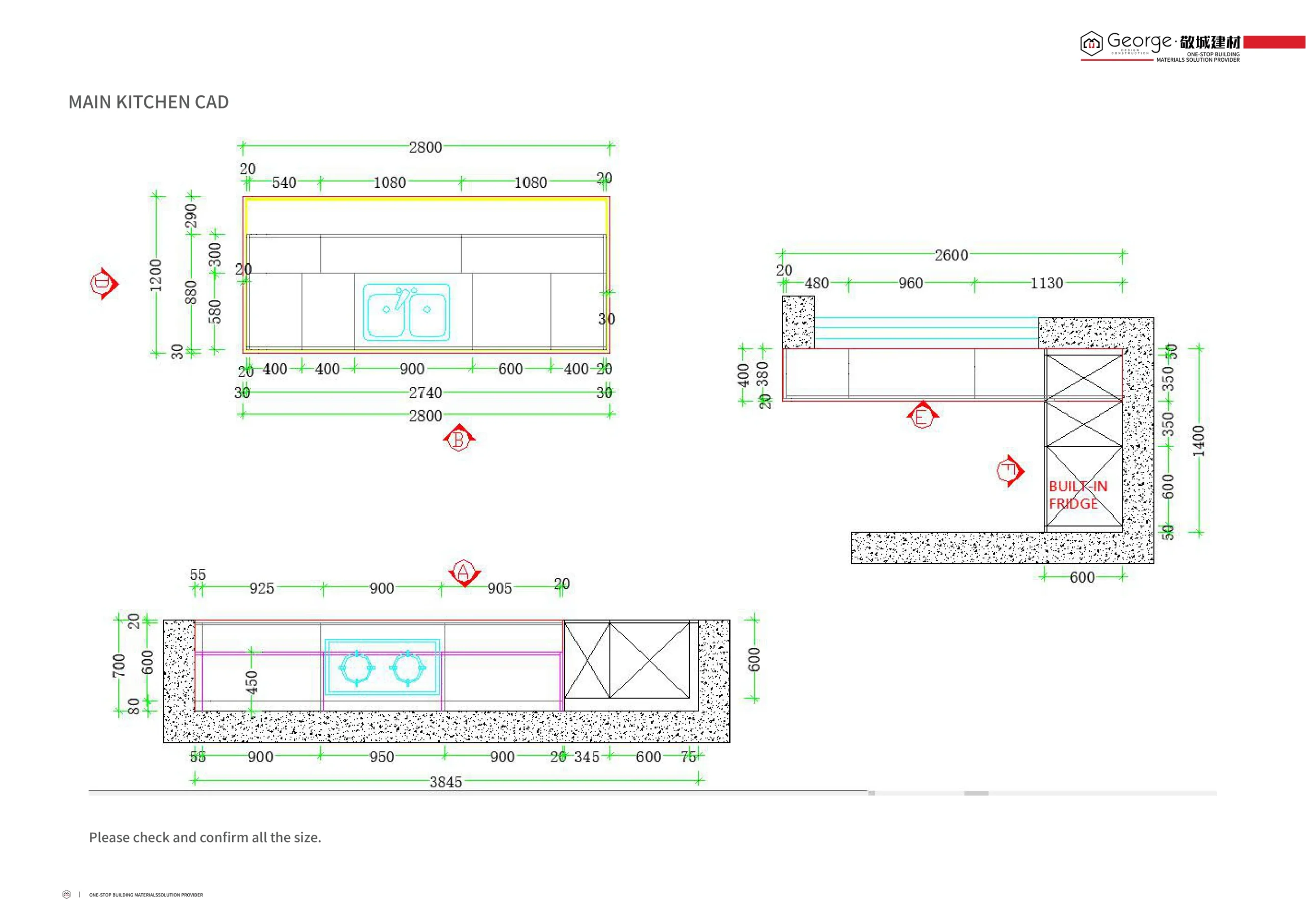
Understanding Shop Drawings
Shop drawings translate the design into information that can be used for manufacturing. Depending on the project, they may include cabinet elevations, plan views, sections, panel dimensions, door arrangements, and notes for hardware or fittings.
Check that every cabinet has a clear position and that the drawings reflect the correct appliance openings, countertop dimensions, access panels, and installation allowances.
Do not approve manufacturing drawings solely because the 3D rendering looks correct. Technical dimensions, details, and materials should be checked independently.
Before requesting a quotation: Prepare the room dimensions, kitchen layout, appliance specifications, cabinet style references, preferred materials, destination country, and project schedule. A complete specification reduces the risk of comparing quotations that cover different products.
How to Find and Evaluate a Kitchen Cabinet Supplier in China
Finding suppliers is relatively straightforward. Determining which supplier is suitable for your project requires more careful evaluation.
A manufacturer experienced with standardized modular cabinets may not be the best fit for an unusually shaped luxury kitchen. Similarly, a company offering highly customized cabinetry may have a different process from one supplying repeated apartment units.
Check Relevant Manufacturing Experience
Review examples of kitchens with similar construction, finishes, and project requirements. If you are ordering cabinetry for an apartment development or hotel, ask how the supplier coordinates repeated units, room variations, and product identification.
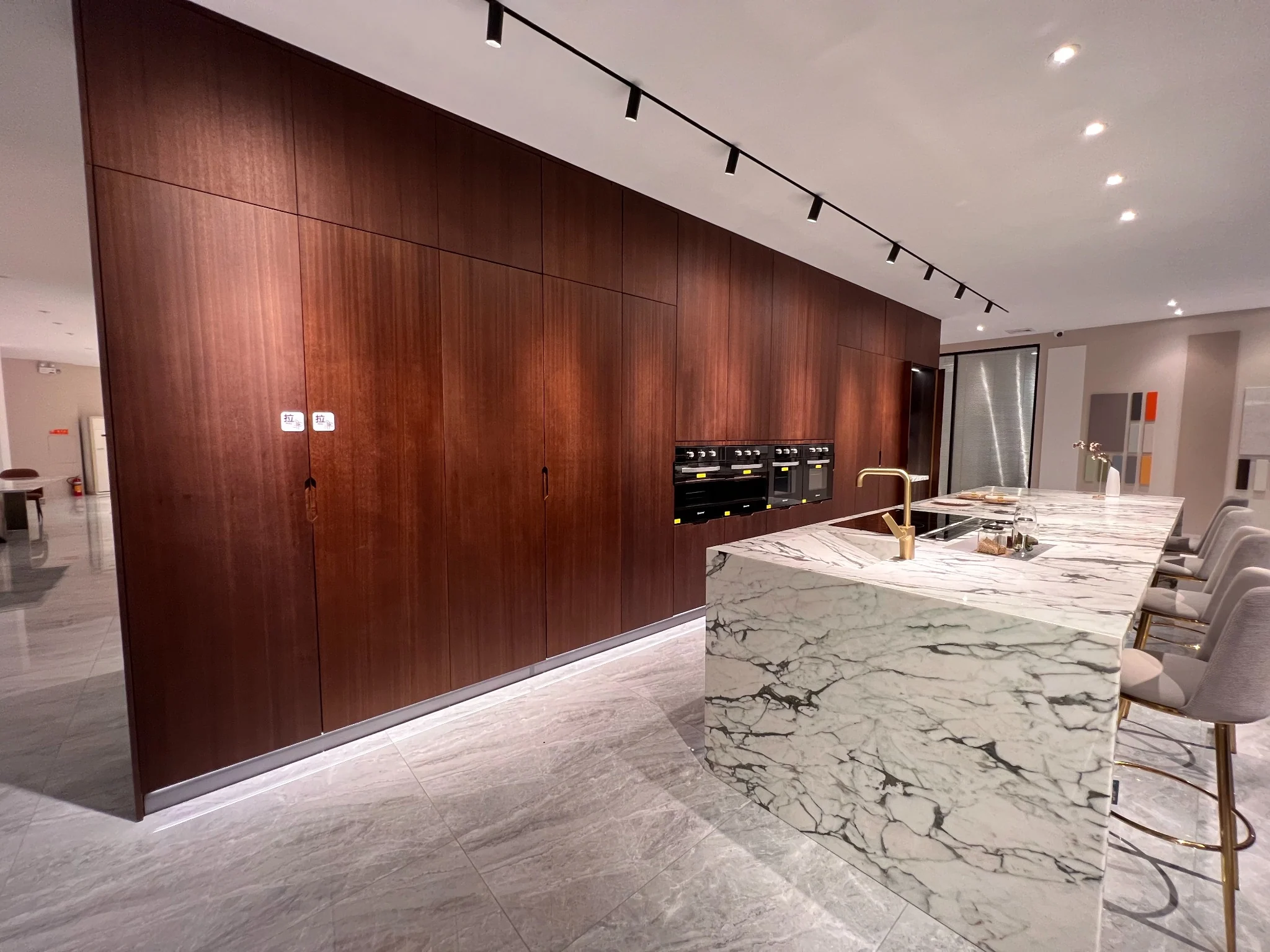
Showroom photos demonstrate available design directions, but they should be supported by product details, material samples, shop drawings, and manufacturing information.
Ask About the Actual Scope of Supply
Not every kitchen supplier provides the same services. Some supply cabinet boxes and doors only. Others may coordinate countertops, sinks, hardware, packaging, and international shipping.
Before comparing quotations, identify who is responsible for each stage: technical drawings, sampling, production, quality checks, shipping documents, customs arrangements, and installation support.
Evaluate Communication and Document Control
Clear communication becomes particularly important when the buyer and manufacturer are in different countries. Revisions to drawings, finishes, hardware, or quantities should be documented and approved.
Request a clear quotation, a written specification, and an identifiable drawing revision before paying a production deposit.
How to Choose Kitchen Cabinet Materials and Finishes
Cabinet materials influence construction, appearance, maintenance, and how the finished units respond to daily use. Different components may require different materials.
Rather than choosing a kitchen simply because it is described as solid wood, plywood, MDF, or moisture-resistant board, ask for a detailed material schedule showing exactly where each material will be used.
Cabinet Boxes, Doors, and Internal Components
Common cabinet-box materials include plywood, MDF, and particleboard in appropriate grades and finishes. Door fronts may use painted engineered panels, wood veneers, solid wood components, or other specified surfaces.
A well-designed kitchen can combine materials where each has a suitable purpose. The panel name alone does not determine the quality of the completed cabinet.
For a more detailed comparison, see our guide to plywood kitchen cabinets, MDF, and particleboard.
Review the Written Material Specification
Before production, confirm the material and thickness of the cabinet sides, bottoms, shelves, backs, doors, and drawer components. Review surface finish, edge treatment, and any additional requirements for moisture-prone areas.
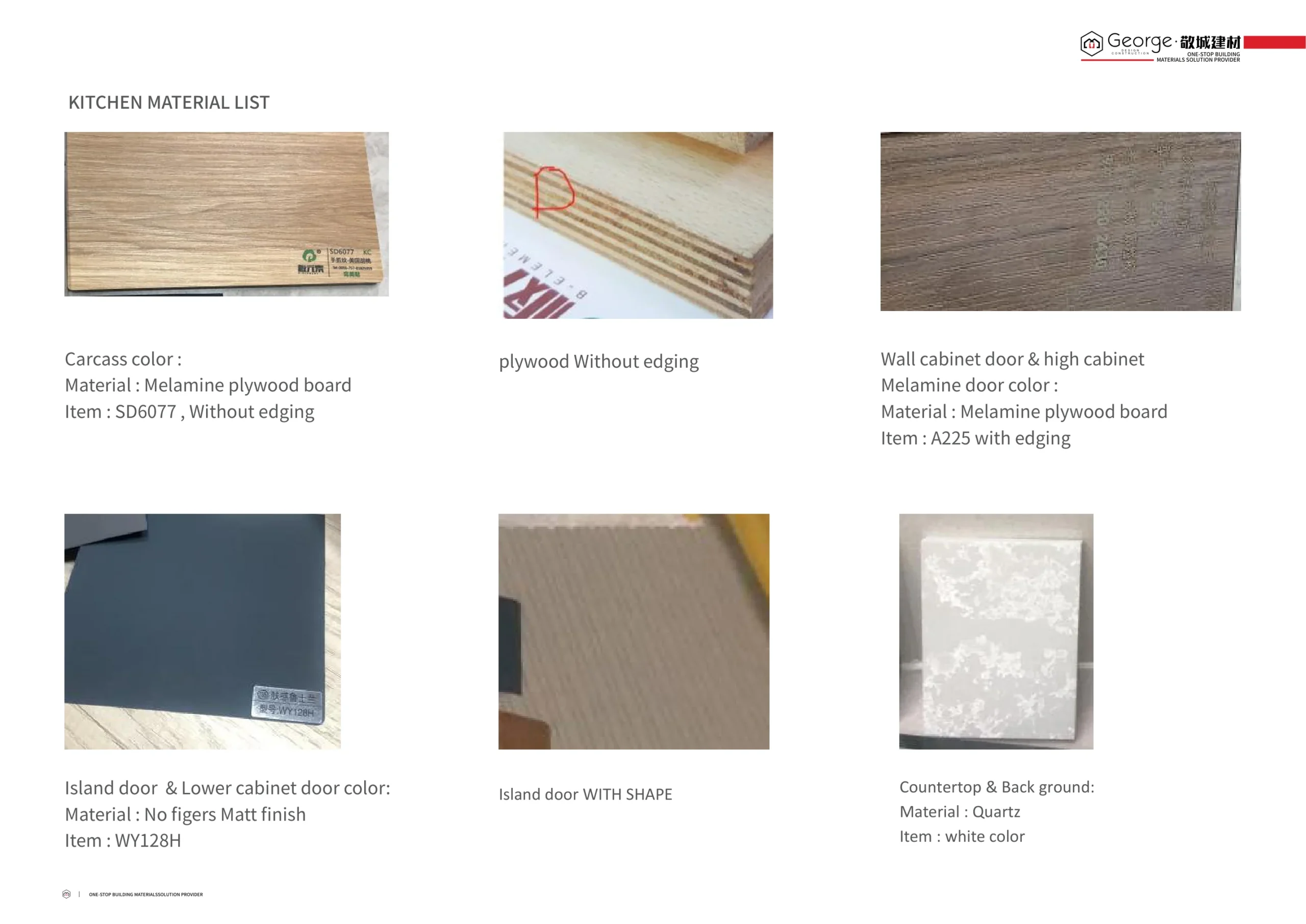
Why the Panel Core Matters
Decorative cabinet surfaces do not necessarily reveal the panel material underneath. A wood-look finish may be applied over different engineered wood cores.
For plywood cabinets, buyers should review the panel grade, core construction, bonding, thickness, and suitability for the intended cabinet component.

Choose Finishes Using Physical Samples
Computer renderings and reference photographs are useful for selecting a direction, but colors and textures may look different under actual lighting conditions.
For a custom order, request samples showing the intended finish, sheen, texture, edge treatment, and visible material details. Approve the sample before production whenever the appearance is important to the final design.
Consider Destination-Market Requirements
If cabinets are intended for the United States, certain composite wood panels and finished products containing them may be subject to EPA TSCA Title VI formaldehyde emission requirements.
Ask for the relevant product documentation and confirm which requirements apply to the materials being supplied. General marketing claims such as “eco-friendly” are not substitutes for appropriate compliance records.
Official information is available from the U.S. Environmental Protection Agency.
Cabinet Hardware and Functional Specifications
Cabinet hardware affects how the kitchen works every day. A visually attractive cabinet can still be disappointing if doors are difficult to adjust, drawers do not support their intended loads, or replacement fittings cannot be identified.
Hinges and Drawer Slides
Common considerations include hinge opening angles, soft-close mechanisms, drawer-slide type, extension length, adjustment range, and load capacity.
Different projects may have different requirements. A private home kitchen and a heavily used shared kitchen may not need the same hardware specification.
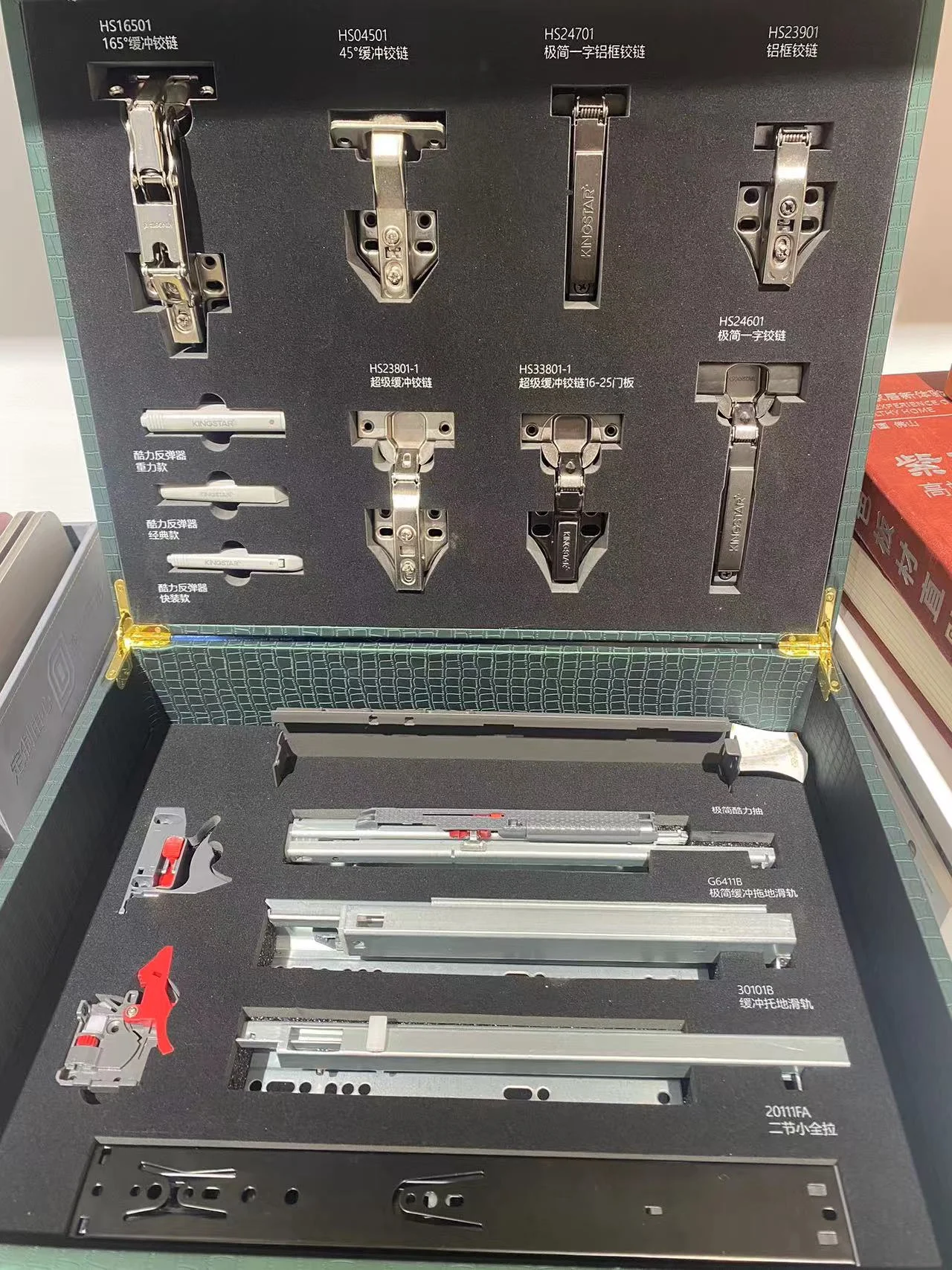
Confirm Hardware Before Production
Ask the supplier to identify the proposed hardware models and their important technical characteristics. If a specific brand or product series is required, include that requirement in the written specification.
Check whether handles, hinges, runners, shelf supports, lighting accessories, and specialized storage fittings are included in the quotation.
Functional Customization
Custom cabinetry may incorporate pull-out storage, corner systems, internal organizers, integrated lighting, appliance panels, and other functional features.
These options can change the required cabinet dimensions and fixing arrangements, so they should be finalized before production drawings are approved.
From Approved Drawings to Cabinet Manufacturing
Once the design, drawings, samples, and specifications are approved, manufacturing can begin according to the agreed production plan.
The exact production sequence depends on the cabinet construction and factory workflow, but the main stages generally include material preparation, panel processing, edge finishing, drilling, assembly, hardware fitting, and quality checks.
Material Preparation and Panel Processing
Cabinet components must be produced according to their required dimensions and quantities. Cutting accuracy is important because small inconsistencies can create problems when multiple panels are assembled.
Edge Finishing and Assembly
Panels should receive the specified edge treatments, surface protection, and machining details. The factory then assembles or prepares the components according to the agreed cabinet construction.
Depending on shipping arrangements, cabinets may be supplied assembled, flat-packed, or in another agreed configuration.
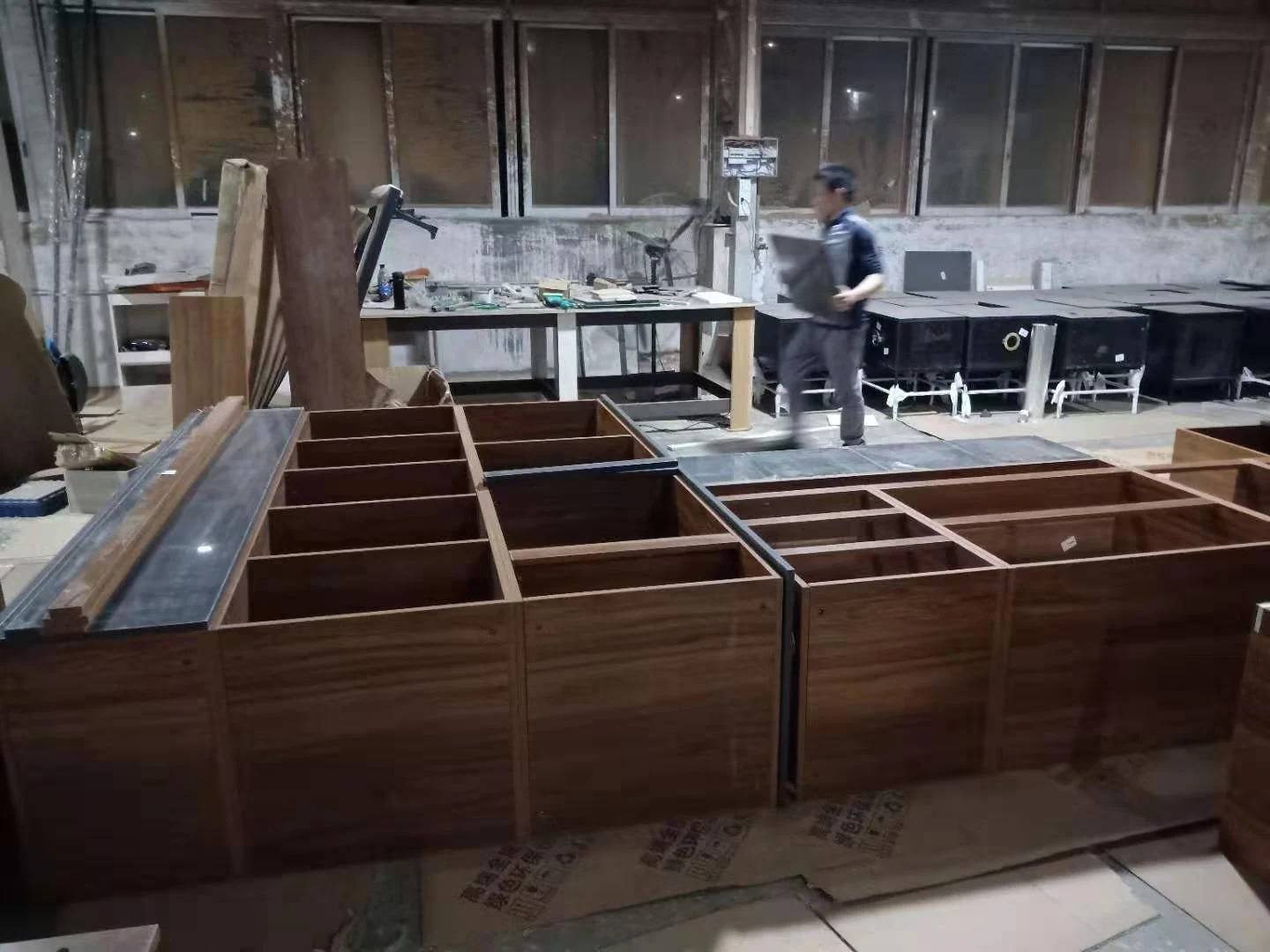
Keep Changes Under Control
Changes to cabinet widths, appliance openings, door finishes, or hardware can affect multiple components. Once manufacturing has started, revisions may require additional machining or replacement parts.
Use a final approved drawing set and record any agreed changes in writing. For projects involving many cabinets, maintain a cabinet schedule so each item can be traced to its intended room and location.
How to Inspect Custom Kitchen Cabinets Before Shipping
Quality inspection is one of the most important parts of sourcing custom kitchen cabinets from China. Problems that are relatively easy to address before dispatch can become much more complicated once products have been transported overseas.
Inspection should be based on the approved drawings, samples, specifications, and purchase agreement rather than on appearance alone.
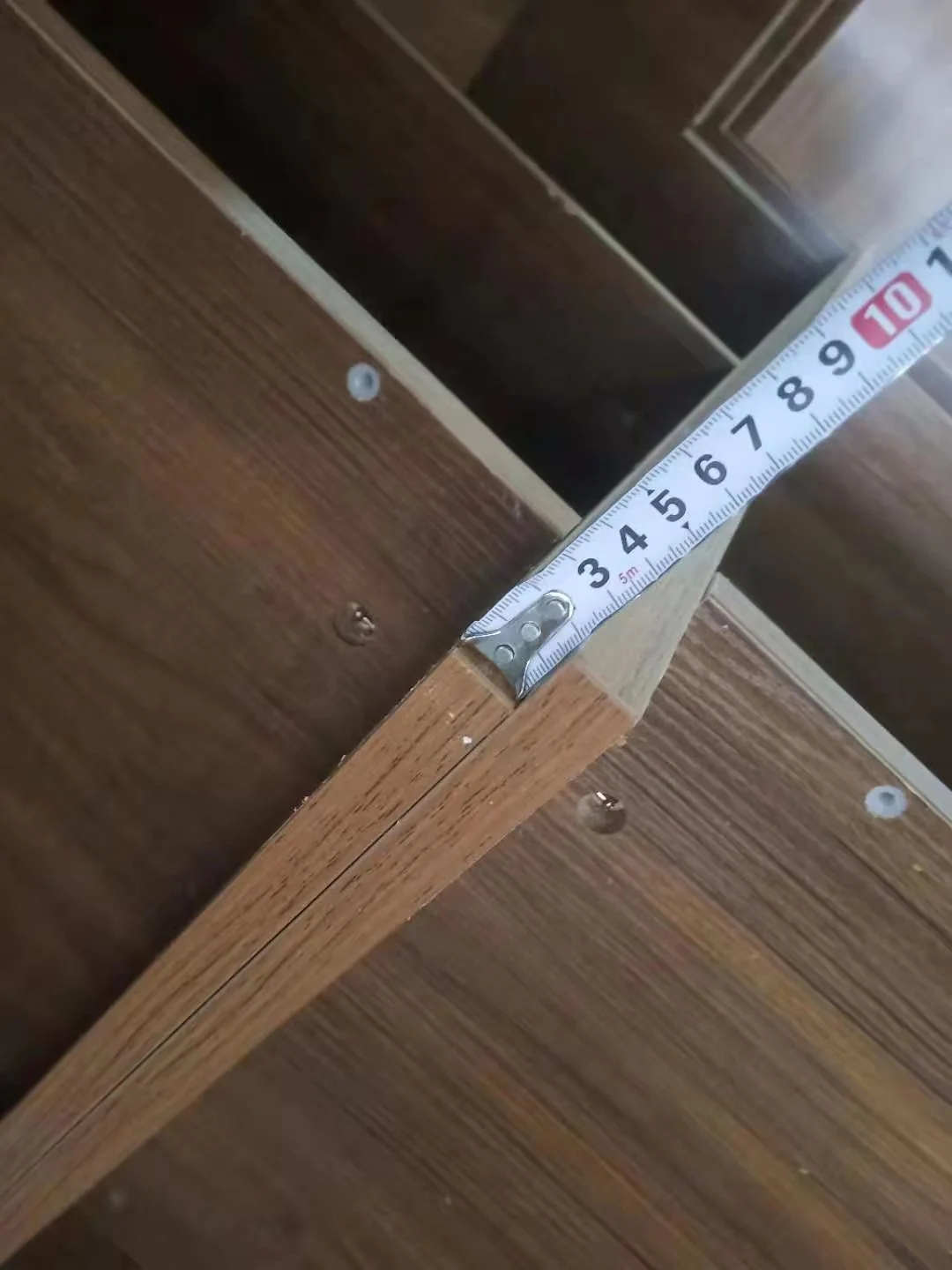
Check Cabinet Dimensions
Confirm that important cabinet measurements match the approved drawings within the agreed tolerances. This may include overall widths, heights, depths, internal openings, and positions of relevant fittings.
Inspect Finishes, Edges, and Hardware
Check the visible surfaces against the approved samples. Look for inconsistent colors, scratches, chips, loose edge banding, and other visible defects.
For assembled units, inspect door alignment, gaps, drawer movement, hinge operation, and accessible internal components where the agreed inspection scope allows.
Verify Quantities and Product Identification
Large projects may contain dozens or hundreds of separate cabinet components. Count the units and check that their labels match the cabinet schedule and packing list.
Replacement parts and installation accessories should be clearly identified so the receiving team can locate them when needed.
| Inspection Area | What Buyers Should Check |
|---|---|
| Dimensions | Overall size, openings, drilling positions, and approved tolerances |
| Materials | Specified panel types, thicknesses, and approved samples |
| Finishes | Color, texture, surface condition, and edge treatment |
| Hardware | Specified models, secure installation, and operating function |
| Quantities | Cabinet schedule, component count, and accessories |
| Packaging | Product identification, protection, and shipment readiness |
A written inspection record with dated photographs and clearly identified issues can make communication between the buyer and supplier more efficient.
Packaging and Shipping Custom Kitchen Cabinets from China
Cabinetry requires careful packaging because the shipment may contain finished doors, large panels, countertops, hardware, and components with different handling requirements.
International shipping is not simply the final step after manufacturing. Package dimensions, shipment volume, handling, customs documentation, and receiving arrangements can influence decisions made much earlier in the project.
Packaging for International Transport
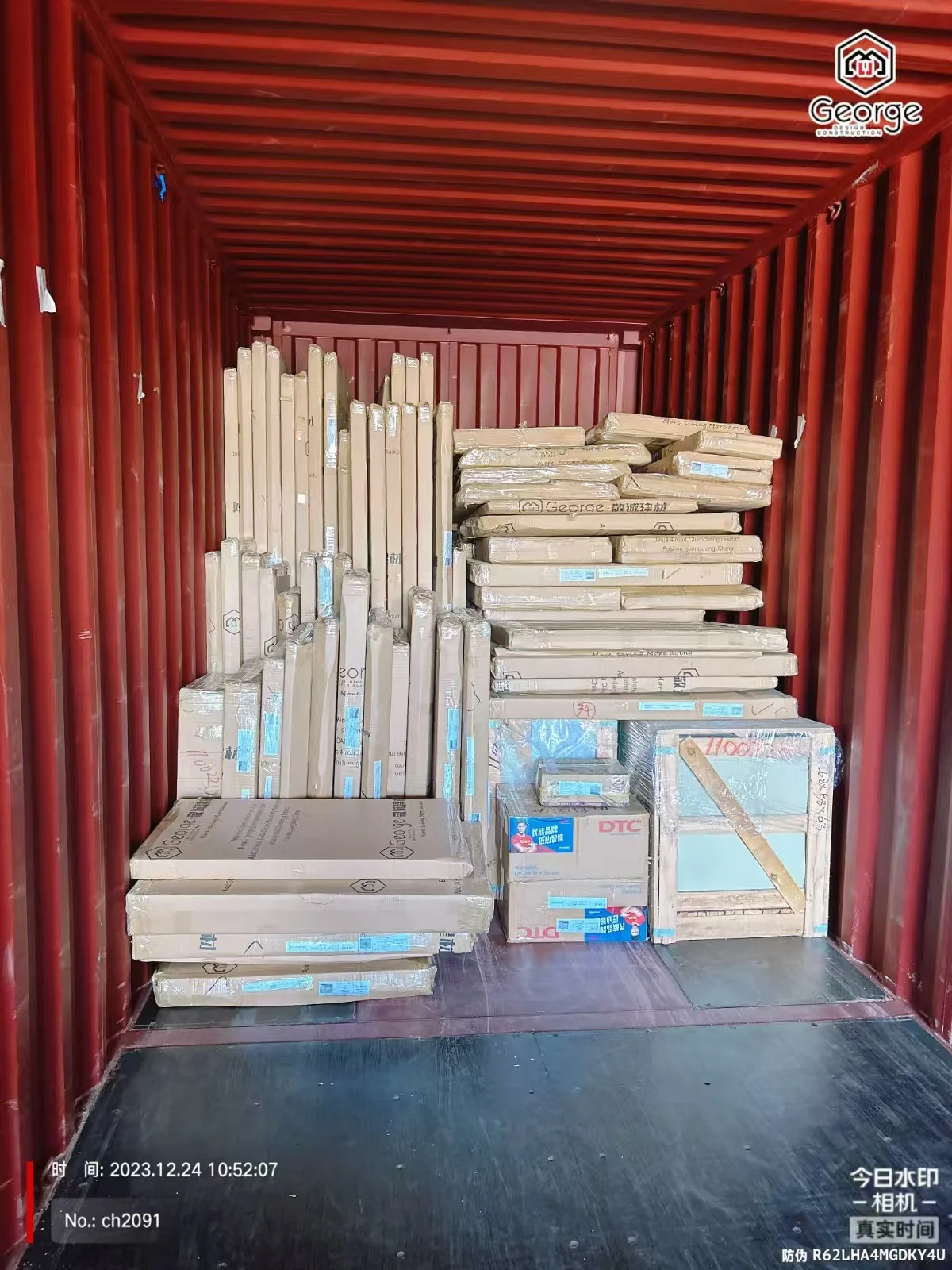
Cabinet components should be protected according to their dimensions, finish, weight, and expected transportation conditions. Depending on the products involved, protective wrapping, corner protection, cartons, pallets, or reinforced wooden packaging may be appropriate.
Fragile surfaces and heavy items should be considered separately. Buyers should confirm whether special export packaging is included in the quotation.
Product Labels and Packing Lists
Each package should be identifiable and traceable to the product schedule. This is particularly important when one shipment contains components for multiple rooms or different construction stages.
The receiving team should have a packing list that makes it possible to identify missing or damaged components without opening every package unnecessarily.
Container Loading and Shipment Coordination
When cabinets and other building materials are shipped together, loading arrangements should consider package dimensions, weight distribution, suitable securing methods, and protection from movement during transportation.
Clarify Shipping Terms and Responsibilities
Before ordering, confirm the agreed Incoterms rule, named place, freight arrangements, cargo insurance responsibilities, customs clearance arrangements, and final delivery location.
Terms such as FOB, CIF, and DDP allocate responsibilities differently. Buyers should understand which costs and risks are covered rather than comparing shipping quotations only by the total amount.
Import duties, applicable taxes, and required customs documentation depend on the destination country, product classification, and shipment details.
Allow for Site and Delivery Coordination
For construction projects, delivery should be coordinated with site readiness. Cabinets arriving before adequate storage or installation space is available may face unnecessary handling and damage risks.
Ask for the expected production and transportation schedule, but do not treat an estimated shipping date as a guaranteed delivery date.
Shipping reminder: Confirm how finished panels, countertops, accessories, and hardware are packaged and labeled. Agree on how transport damage or shortages will be documented and reported after delivery.
How to Prepare for Overseas Kitchen Cabinet Installation
Cabinet manufacturing and cabinet installation are closely connected, even when the two stages are completed by different teams.
Before the shipment arrives, the receiving contractor should understand the approved layout, component identification, required site conditions, and installation sequence.
Verify the Site Before Installation
Check that wall finishes, floor levels, plumbing, electrical connections, and relevant construction works are ready. Appliance positions and service clearances should agree with the approved design.
Where necessary, local installers should verify dimensions again before fixing cabinetry or preparing countertops.
Organize Cabinets by Room and Location
For multi-unit developments, clear cabinet labels help installers identify which parts belong to each kitchen. A component schedule and installation drawings can reduce confusion when several similar layouts are being fitted.
Final Alignment and Adjustments
Installation work may include leveling base cabinets, securing units to suitable structural supports, adjusting doors and drawers, fitting accessories, and coordinating countertop or appliance installation.
Actual fixing methods and installation responsibilities should be determined by qualified professionals familiar with the site and applicable local requirements.
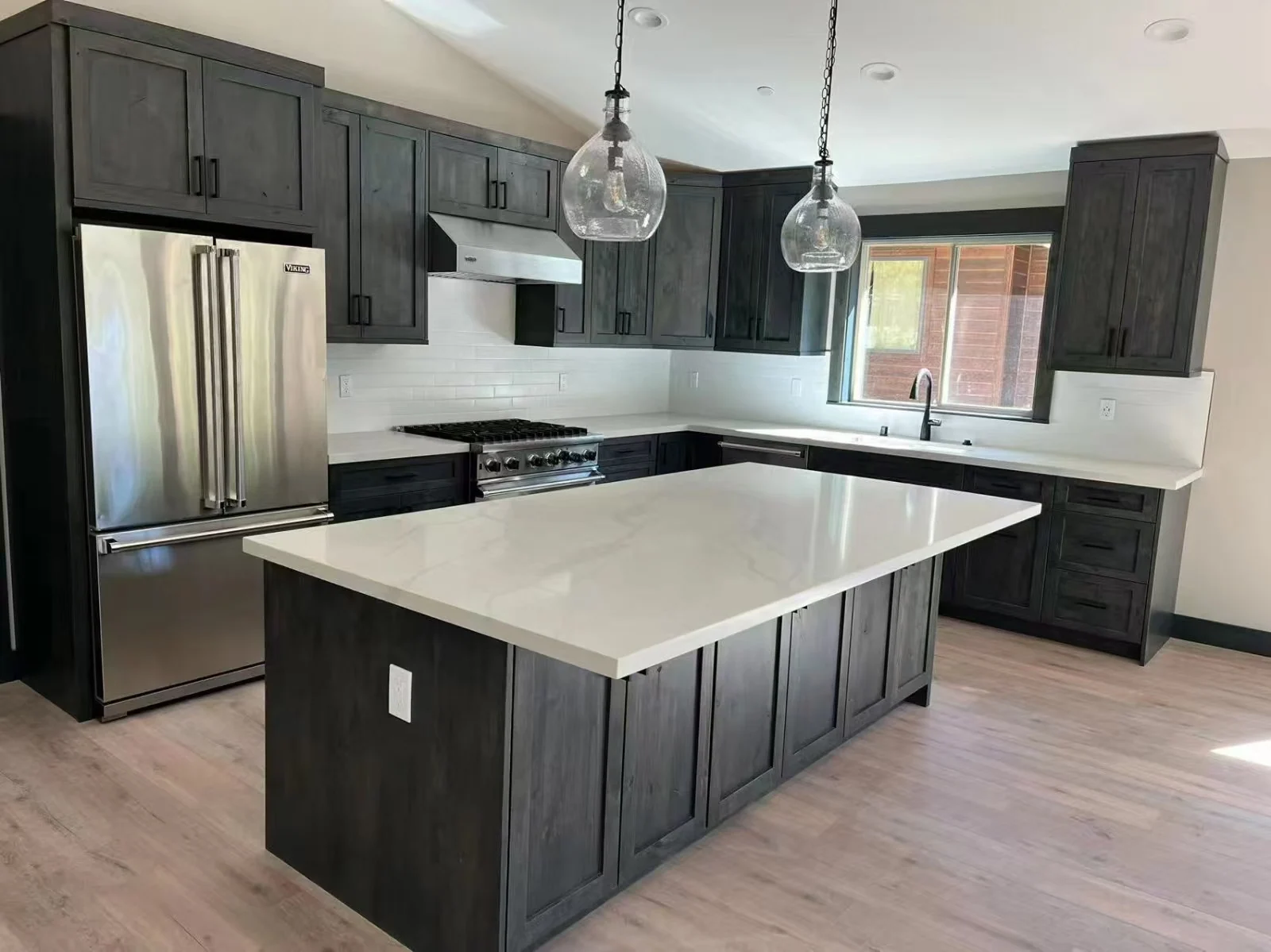
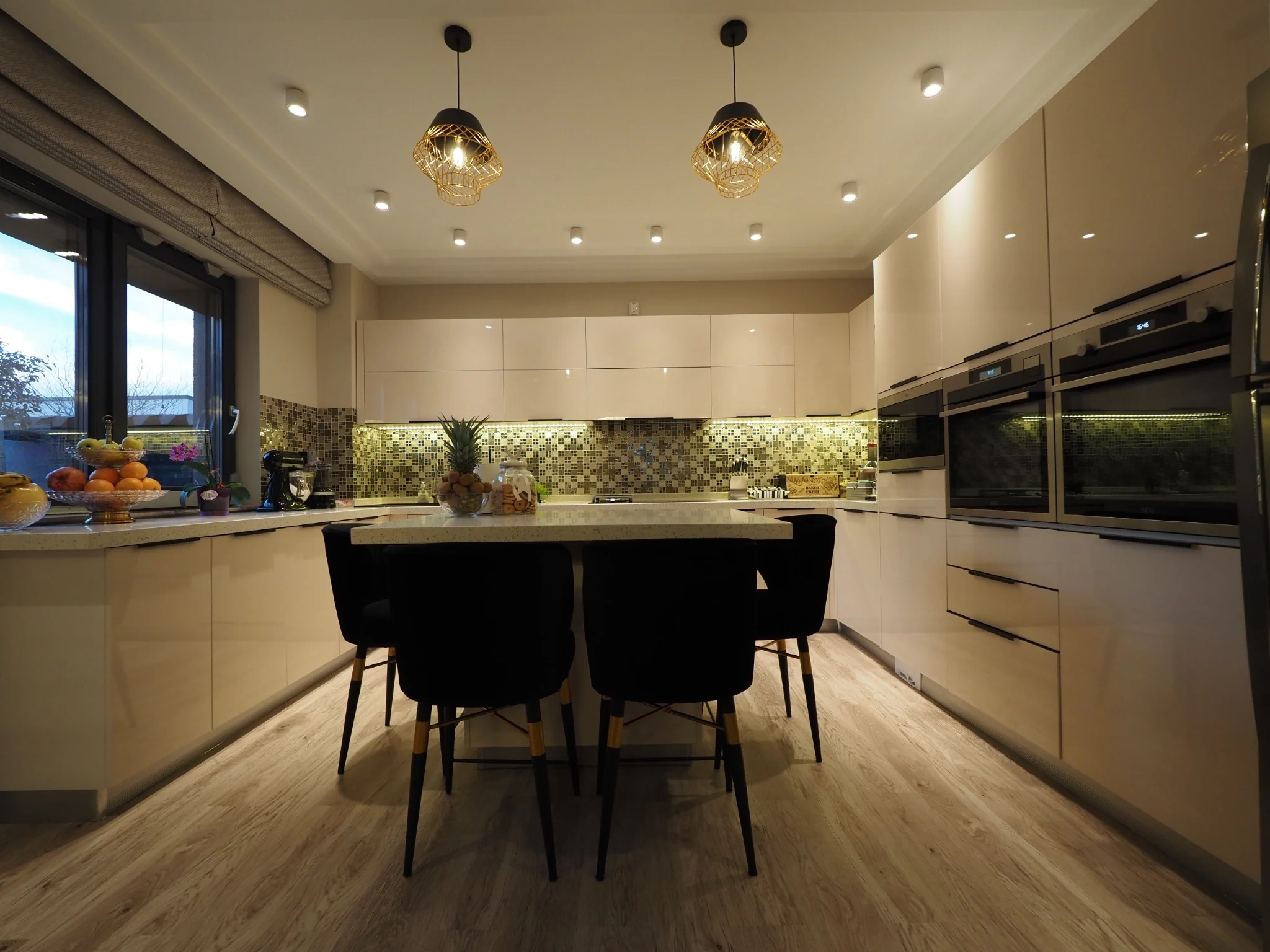
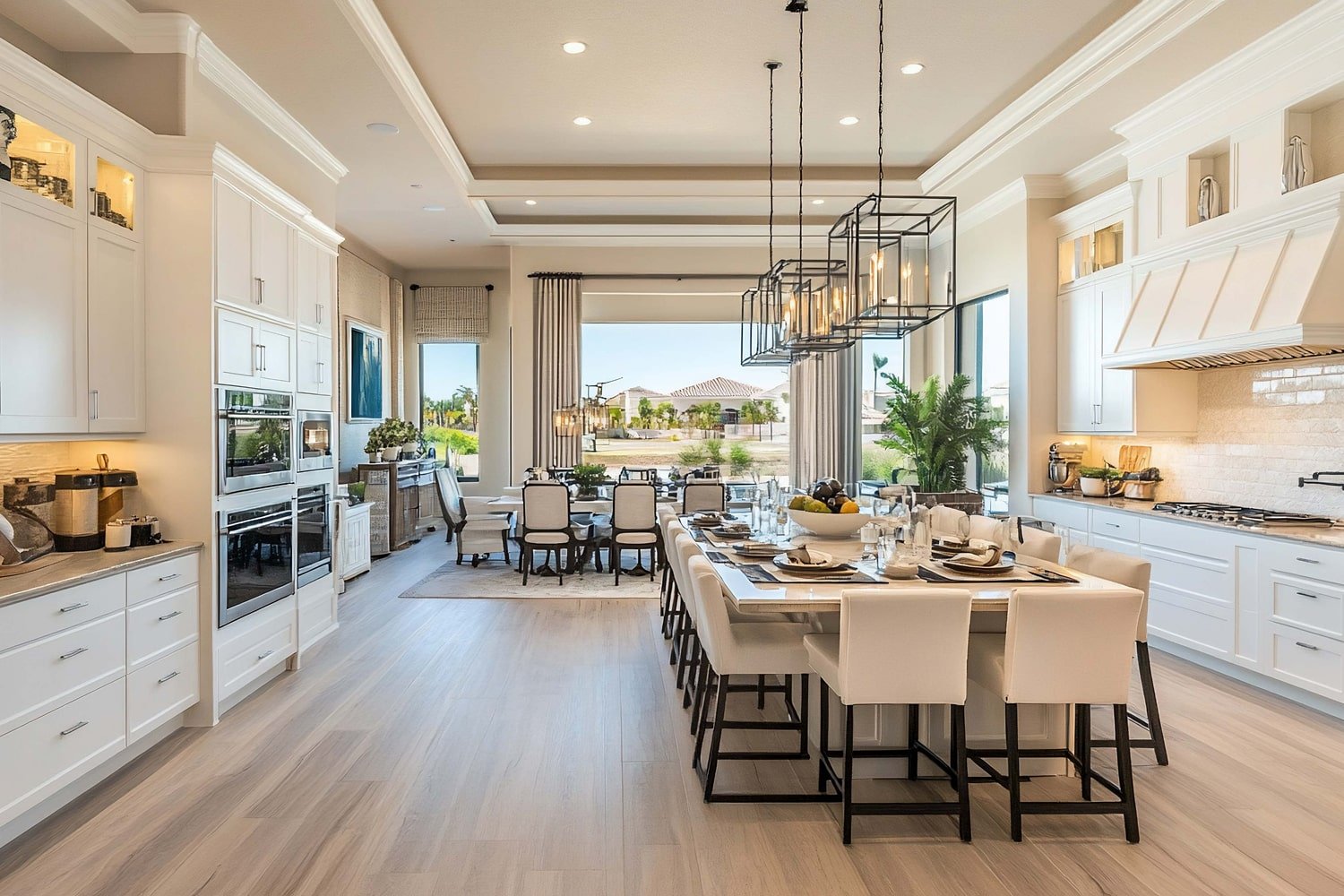
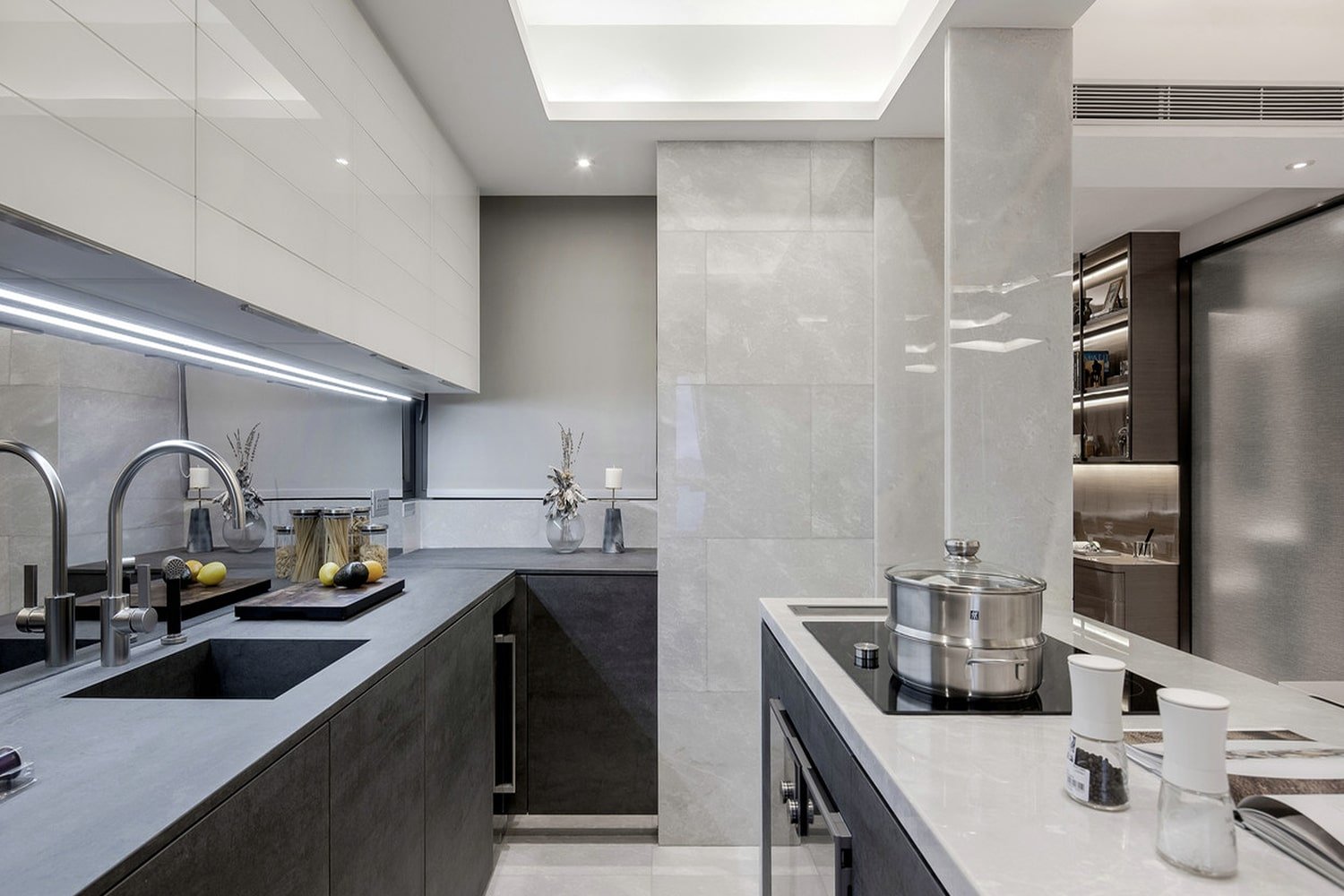
These references illustrate different kitchen settings and stages. They should not be treated as a before-and-after sequence from one project unless that relationship has been separately established.
Common Mistakes When Importing Kitchen Cabinets from China
Many sourcing problems are avoidable if the buyer confirms the critical details before production rather than waiting until delivery.
1. Ordering from Renderings Without Technical Drawings
A rendering can communicate style and appearance, but it does not necessarily include manufacturing dimensions, joinery details, appliance clearances, or installation allowances.
Always review the technical drawings and written specification.
2. Comparing Quotations with Different Specifications
One quotation may include different board materials, hardware, finishes, accessories, or packaging from another. A lower price does not necessarily represent the same product.
Ask suppliers to quote against a common specification and identify exclusions.
3. Approving Colors Without Samples
Lighting conditions and digital screens can change the appearance of materials. Physical samples help buyers evaluate finish quality, surface texture, and color consistency.
4. Forgetting Installation and Appliance Details
Custom cabinets must work with the actual building. Missing appliance dimensions, incorrect plumbing positions, and unverified site measurements can create installation problems.
5. Skipping Pre-Shipment Inspection
Without an agreed inspection process, problems may be discovered only after the goods arrive. Confirm the inspection scope, responsibilities, and reporting process before production is complete.
6. Overlooking Packaging and Delivery Arrangements
Large cabinet shipments require identifiable packages and suitable protection. Buyers should also clarify who arranges customs clearance, local delivery, unloading, storage, and installation.
Frequently Asked Questions
Can I order fully custom kitchen cabinets from China?
Yes. Many suppliers offer made-to-order cabinets based on approved dimensions, layouts, materials, and finishes. The available level of customization depends on the manufacturer and the project requirements. Buyers should confirm technical feasibility before approving an order.
What drawings are needed for custom kitchen cabinets?
A floor plan, site dimensions, cabinet elevations, and appliance information are useful starting points. Detailed manufacturing drawings may also be required before production. The final drawings should identify cabinet dimensions, relevant construction details, and the approved specifications.
How can I check the quality of cabinets before shipping?
Agree on inspection criteria before production. Review dimensions, panel materials, visible finishes, edge treatment, hardware, quantities, and packaging against approved documents. Inspection photographs and written records should identify any issues that need resolution before dispatch.
Are plywood kitchen cabinets available from Chinese suppliers?
Yes. Plywood is one of several materials used for cabinet components. Buyers should confirm the panel grade, thickness, construction, finish, and the exact parts that will use plywood. The term “plywood cabinets” does not necessarily mean every component is made from plywood.
How long does it take to manufacture and ship custom kitchen cabinets from China?
Lead times vary depending on order size, design complexity, material availability, sampling, production capacity, shipping method, and destination. Request separate estimates for drawing approval, manufacturing, packing, international transportation, and local delivery.
Can kitchen cabinets and other building materials ship together?
Combined shipping may be possible if the suppliers, packaging requirements, shipment schedule, and transport arrangements are compatible. A sourcing partner can help coordinate product consolidation, but the exact scope and responsibilities should be confirmed for each project.
Does a Chinese cabinet supplier also install the kitchen overseas?
Not necessarily. Many suppliers focus on manufacturing and export supply, while installation is handled by a contractor in the destination country. Buyers should confirm whether installation drawings, labeled components, technical guidance, or on-site services are included.
What information should I send to request a custom cabinet quotation?
Provide drawings or room measurements, a preferred kitchen layout, reference images, material and finish preferences, appliance information, project location, and expected quantities. Include your delivery destination and any special requirements for compliance, packaging, or installation.